

Maximize yield capture with a Drago corn head
Harvest is when farmers reap the rewards of their hard work. It’s also when they face major variability in environmental conditions — and potential harvest loss — as they race against the clock to get the crop in the bin.
Time is of the essence during corn harvest, with a crop at maturity and weather conditions that can range from heat and humidity to wind and snow. Making sure your crop gets harvested at the optimal time takes planning, accounting for potential roadblocks from Mother Nature, and employing the right equipment, says Fenton, Iowa, farmer and Dragotec USA vice president of sales & marketing Dustin Bollig.
“You have to consider a wide variety of factors when determining the optimal corn harvest timeframe — field-by-field and hybrid-by-hybrid,” Bollig says. “There’s risk to harvesting too early, just as there’s risk to leaving a crop in the field too long. You need to weigh all the variables that can impact drydown, harvest capture and profitability, including plant health, grain moisture, hybrid characteristics, drying costs, field history and the weather. Heavy rain, high winds or even a snowstorm at harvest can knock your crop down almost immediately. Create a harvest plan, but be ready to react if harvest conditions change.”
Grain moisture at corn harvest
Shelling loss and ear bounce are common ways to lose yield at corn harvest during moisture extremes. It’s important to find the “sweet spot” for crop moisture at harvest.
“Delaying harvest until corn dries to 15% to 20% will save considerable artificial drying costs,” according to a report from Iowa State University Extension agronomist Roger Elmore.
The general weather conditions immediately preceding harvest can give you a good idea of how drydown is progressing. As a rule of thumb, corn at maturity is between 25% and 35% moisture, and depending on the weather conditions, it typically takes at least two weeks to dry down to 20% moisture.
“Grain usually dries at a linear rate that varies depending on weather and other factors. For example, wet and cool weather slows drying,” Elmore says. “We’ve seen drydown rates less than 0.3% per day. On the other hand, warm, dry weather speeds drying; kernels can lose up to 1.0% moisture per day with excellent drying weather.”
Crop deterioration concerns
Though modern corn genetics help the crop stand better in the field longer, once it’s reached maturity, deterioration begins. And, when stalks start to deteriorate, yield loss potential grows quickly.
“Standing in the field past maturity, the crop is getting weaker by the day, and the deterioration process accelerates, especially when facing weather extremes,” Bollig says. “The stalk and ear shank can weaken and cause down corn and ear loss. And the later you move into the season, the greater the potential yield loss.”
Balancing the right crop moisture levels with potential deterioration can be difficult, but it can make all the difference in minimizing yield loss.
“Harvest efficiency decreases and losses increase significantly in fields with down corn. When prioritizing corn harvest in fields with down corn, review them based on the severity of lodging, grain moisture, root and stalk quality and ear retention,” he says. “Schedule harvest based on these variables.”
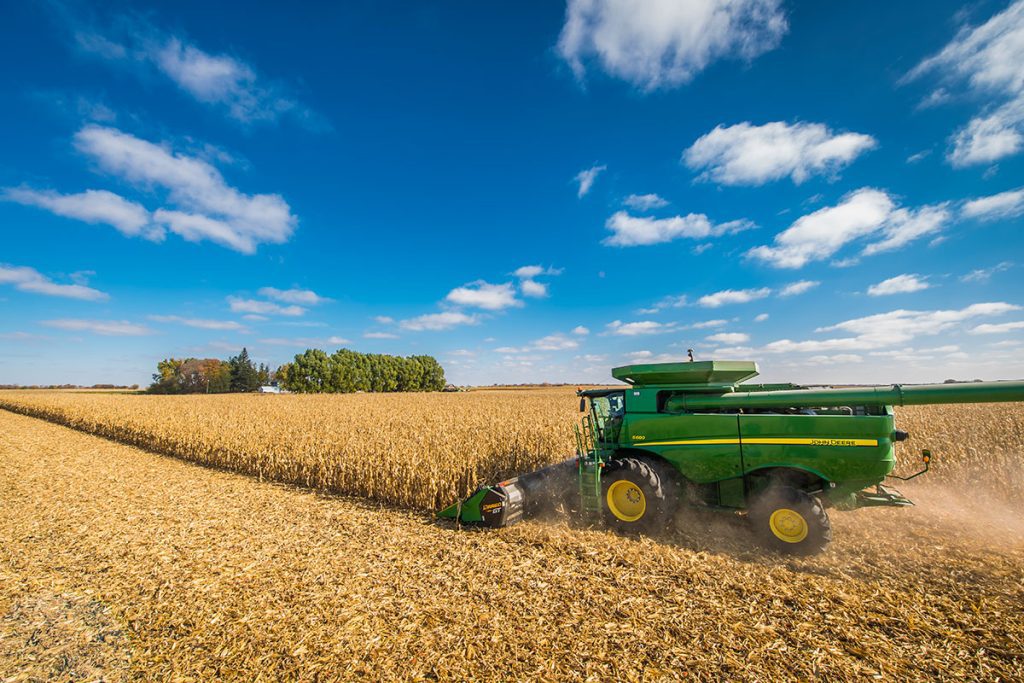
React with the right equipment
Though you can typically track drydown to the optimal point at harvest, Bollig says it’s important to stay vigilant and scout for sudden changes in conditions that can lead to greater crop deterioration. Having the right equipment can help you react to the variability and challenges common at harvest time.
“If you have a corn head that does a better job of picking up down corn, automatically adjusts to stalk variability and limits butt shelling and ear bounce, you have a better chance of widening your corn harvest window and capturing more yield,” Bollig says.
“That crop really isn’t yours until you’ve got it in the combine tank. A Drago GT or Series II corn head can help capture corn that Mother Nature has mistreated leading up to harvest. You can still go get it and minimize yield loss with a Drago.”