

When is corn head replacement more cost-effective than making repairs?
Optimizing the performance of your combine is considered key to corn harvest efficiency, but today we know corn head performance is equally as critical.
“Twenty years ago, it wasn’t unusual to see the same corn head run through two or even three different combines,” says Dustin Bollig, Iowa farmer and Dragotec vice president of sales and marketing. “But with today’s enhanced genetics, tougher stalks, added acres, and more plant material running through the corn head, that trend has changed.
It’s a fact that once your combine is set, most of the yield loss during harvest is at the corn head.*
“Upgrading your combine doesn’t change the fact that 60 percent of harvest loss occurs at the corn head,” Bollig says. “The best way to limit loss and maximize your return on investment is with better corn head technology. And that could mean looking at corn head replacement.”
1. Evaluate reasons to upgrade
“In many cases, producers will purchase a new corn head because they changed planters – they may have changed row spacing or added more rows,” Bollig says. “Or they may want a chopping head to save trips across the field. But the most common reasons for replacing a corn head include improving reliability, increasing capacity and minimizing maintenance costs.
“As a corn head ages, producers must evaluate its wear, increasing maintenance, the cost of corn head replacement parts, and potential downtime at harvest,” he says. “Sometimes, you can use lower-cost, after-market parts, but they may give you more headaches at harvest through breakdowns, have shorter lives, and end up costing you more money.”
2. Consider ROI of corn head replacement
Another reason producers upgrade their corn head is simply to gain harvest efficiency.
“The problem with that is most corn head brands are designed the same way they were 40 years ago,” Bollig says. “The mechanics are basically the same, only now we are driving higher-horsepower machines faster and harvesting more plants per acre with tougher stalks, and it’s creating more wear issues than in the past.”
He points out that because of market price pressures, farmers may operate equipment longer than they would have a few years ago. “That trend puts a premium on the durability of every piece of equipment.
“Farmers with sharp pencils are looking more closely at equipment durability and how machines are built as a way to manage costs without losing yield.”
Bollig notes that Drago is the only corn head brand that has made significant changes to improve both harvest efficiency and durability. “The Drago GT delivers significant upgrades compared to popular full-line brands.”
3. Closely examine your corn head
The condition of components that may determine the need for corn head replacement starts with the corn head drive system.
“Inevitably, as chains, sprockets and gears wear, drive system components lose efficiency,” Bollig says. “In comparison, the spiral-cut gears on Drago GT’s Endura Drive™ system eliminate common maintenance issues with both chains and conventional gears.”
He says producers must use their discretion when weighing the cost of repairs versus corn head replacement.
“When making a decision about part replacements, ask yourself, ‘What is it going to cost me?’ and do not always think about the cost of the part itself,” Bollig advises. “Consider the job it will do and if it will last the season.”
It’s also important to consider the age and expected life of your corn head.
“Metalurgical tests and studies on Drago knife roller blades and gathering chains, for example, show our OEM blades perform three times longer than off-brand blades, and that our gathering chains perform two times longer than offbrand chains,” Bollig says.
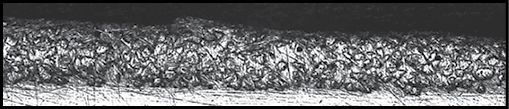
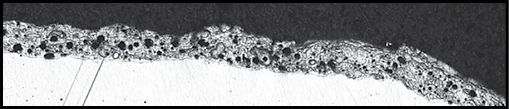
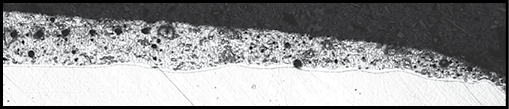
“So while the cost of an off-brand part may be cheaper initially, the cost of added purchases and labor can make them significantly more expensive over time.”
Bollig notes that cheaper corn head replacement parts can unexpectedly impact related components, too.
“Lower-quality gathering chains, having less or inconsistent application of chrome on pins than OEM Drago chains for example, don’t run as smoothly, create more friction and cause undue wear on the sprockets they run on,” Bollig says. “It isn’t just the chains you’ll be replacing.”
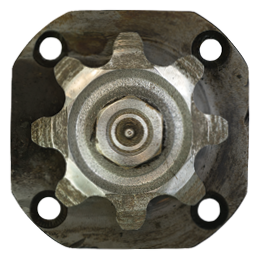
Sprocket wear with Drago gathering chains
Sprocket wear with off-brand gathering chains
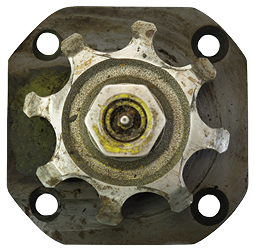
Another critical component for evaluating the life of a corn head is its gearboxes.
“Gearboxes are at the heart of any corn head and their wear can be a great indicator of its longevity,” Bollig says. “Producers might consider replacing their corn head when its row unit gearboxes begin to fail or when there is excessive backlash movement of rotating shafts and sprockets.”
4. The more protection, the better
“If you look at what’s happening at the corn head during harvest, it’s a brutal action. And now, with more plants per acre and tougher stalks, it’s creating more wear on the corn head,” Bollig adds. “A Drago corn head works to protect every individual component, so it is as durable as possible.”
One way to protect those components and improve durability is by limiting torque. The Drago GT corn head features Precise Clutch Technology™, a set of radial-pin slip clutches for each friction point in the machine.
“Most corn heads have a single slip clutch for each row unit that is external. That means the torque load for that main slip clutch is extremely high. In the Drago GT, each component has a clutch with the torque to protect that component,” Bollig says. “This extends the life of each of those components by applying the right amount of protection for that component’s job.”
5. An affordable upgrade
“When you are buying a corn head you must consider its return on investment. The longer that equipment can run before it needs to be rebuilt or replaced, the better. It’s a big factor in calculating ROI,” he says.
Whether purchasing new or used, corn head upgrades can be an affordable alternative to improving combine performance. You don’t always have to replace the largest, most expensive machine in your harvest equipment line-up.
He notes that more than ever, producers are looking at how corn heads are built for durability when making purchase decisions. “Drago’s design features like spiral-cut bevel gearboxes, chainless drives and longer knife rollers play a role in how a corn head performs and can help extend the life of the head.”
* Iowa State University, Verifying Combine Adjustments During Crop Harvest, Sept. 26, 2019
Graeme Quick, Iowa State University